Gmos Facts You Need to Know
Walk into any grocery store and you'll see lots of different labels plastered across a variety of nutrient packaging. And without additional data accompanying these labels (what does "all natural" actually mean?), they may crusade more confusion than clarity, besides as increment the cost of a food product.
Nosotros know you take questions nigh GMOs – from the prophylactic of GMOs, to why farmers and food companies use them, to what foods (or food ingredients) were developed using genetic engineering.
Here nosotros break down 10 things you should know about GMOs so that you lot can decipher any non-GMO and GMO labels with ease.
i. Yes, GMOs are safe
Thousands of studies have ended GMOs are safety, including a contempo analysis from the National Academies of Sciences, Engineering and Medicine (NAS) that researched this very same question and again concluded: Yeah, GMOs are prophylactic
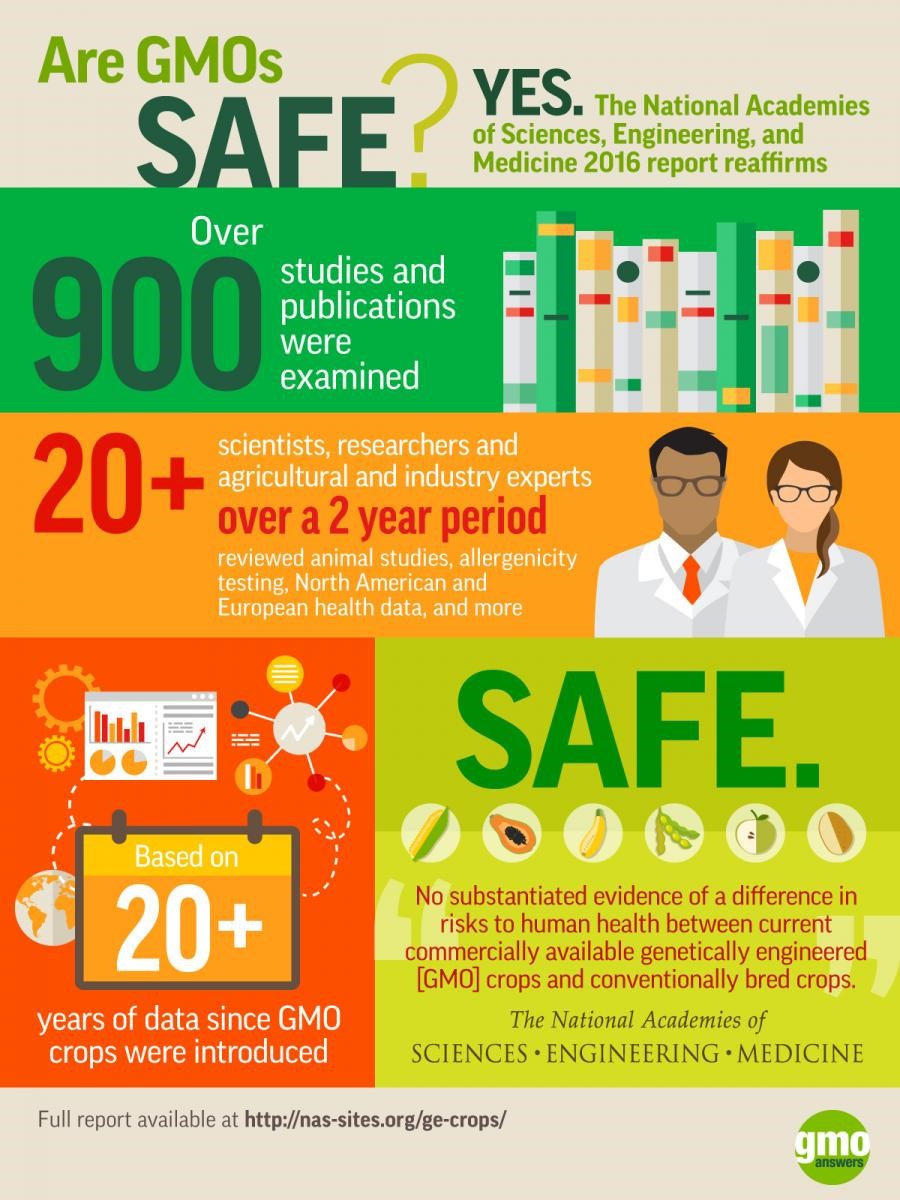
Additionally, the U.Southward. Drug and Food Administration, American Medical Clan, World Wellness Arrangement, Academy of Nutrition and Dietetics, The American Medical Association and many other international organizations have also reviewed and confirmed biotech foods are safe.
Genetically modified food products and food ingredients have been evaluated and approved for food and feed import globally. More than xx years of information in credible scientific studies show no long-term effects from eating GMOs.
2. In that location are only 10 GMO crops commercially available
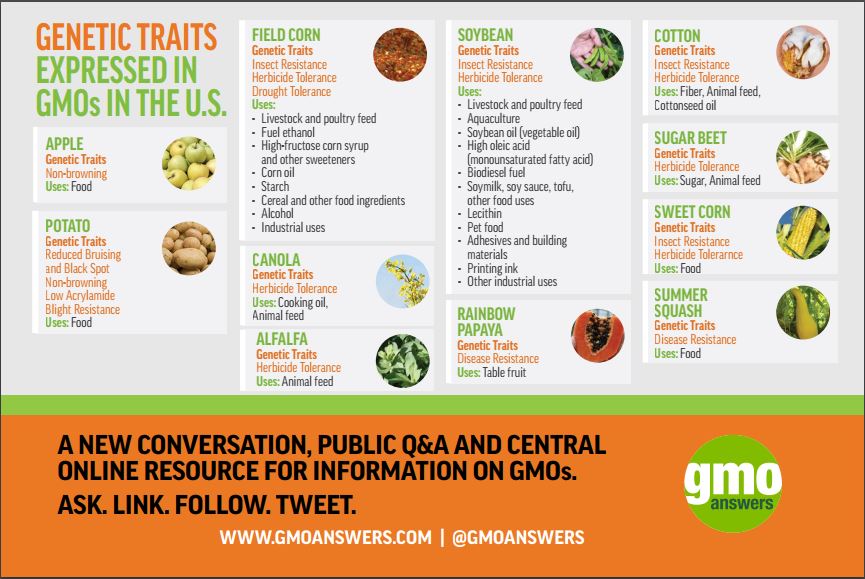
Wondering what a GMO is and what information technology isn't? At that place are simply 10 GMO crops sold commercially in the U.S.: Alfalfa, Canola, Corn (field and sweet), Cotton fiber, Papaya, Potatoes, Soybeans, Squash, Sugar beets and Apples. Some of these crops, like papaya, are typically consumed whole, while others, like sugar beets, soybeans and field corn, are processed into ingredients plant in common nutrient products.
This graphic below lists the characteristics and genetic traits in GMOs.
3. Most foods don't have a GMO counterpart
You tin purchase GMO-complimentary h2o and table salt - but here's the catch: it'south not possible for either to be a GMO in the get-go place! Even though these products and many others aren't amongst the ten GMO crops that are commercially sold in the US, you may still meet a certified GMO-free label - and additional toll - on products like these.
4. Genetic modification in crops is not new
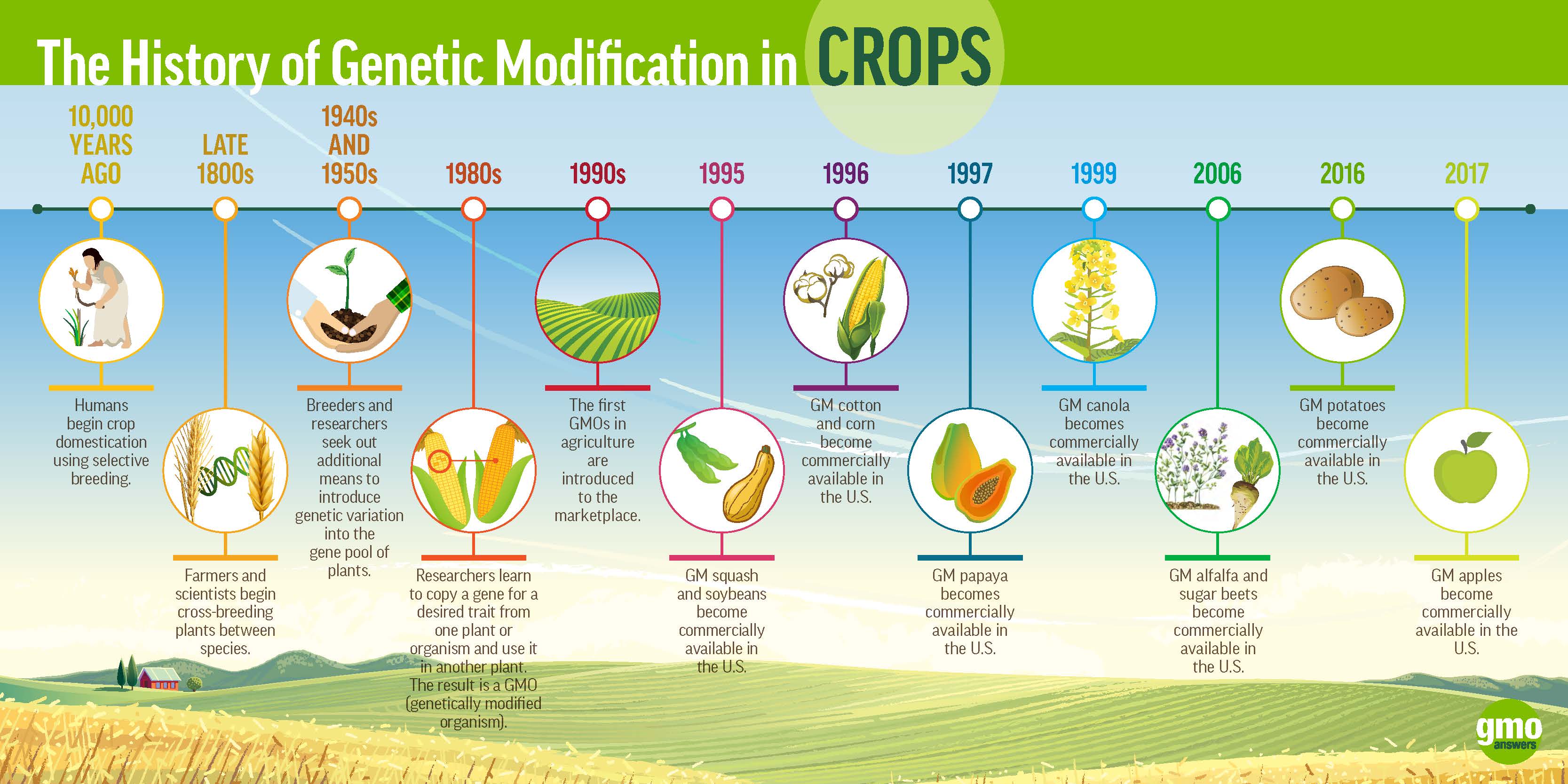
Farmers have been modifying the genetic makeup of crops for thousands of years. See how crop domestication and modification developed over time.
five. Improving a plant doesn't automatically go far a GMO
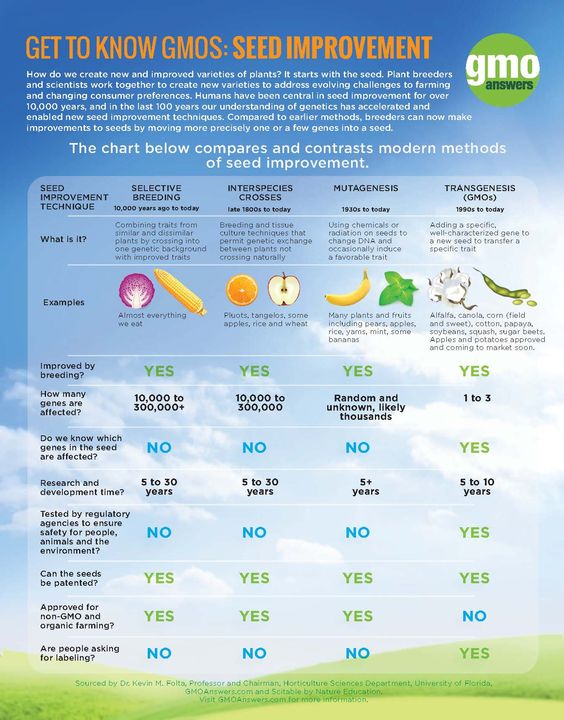
Cotton candy grapes, pluots and seedless watermelons are all GMOs right? Nope – they're developed through a range of seed improvement techniques that aren't GMO. Learn in this chart iv common ways varieties of plants are created.
half dozen. GMOs go through extensive inquiry and testing before coming to market
It requires a tremendous investment of both time and resources to commercialize a new biotech ingather. On average, GMOs take 13 years and $130 million of research and evolution before coming to marketplace. The regulatory procedure alone tin can take five to seven years.
Every bit one of the GMO Answers experts explained, "While that price tag is meaning, and so are the losses from pests, diseases and other issues that these new traits are designed to help farmers combat. For case, the U.S. Department of Agriculture has estimated corn rootworm causes $1 billion in harm to the U.S. corn ingather alone each year. By delivering traits that can fight these pests, information technology increases farmers' productivity."
vii. GMOs don't cause allergies
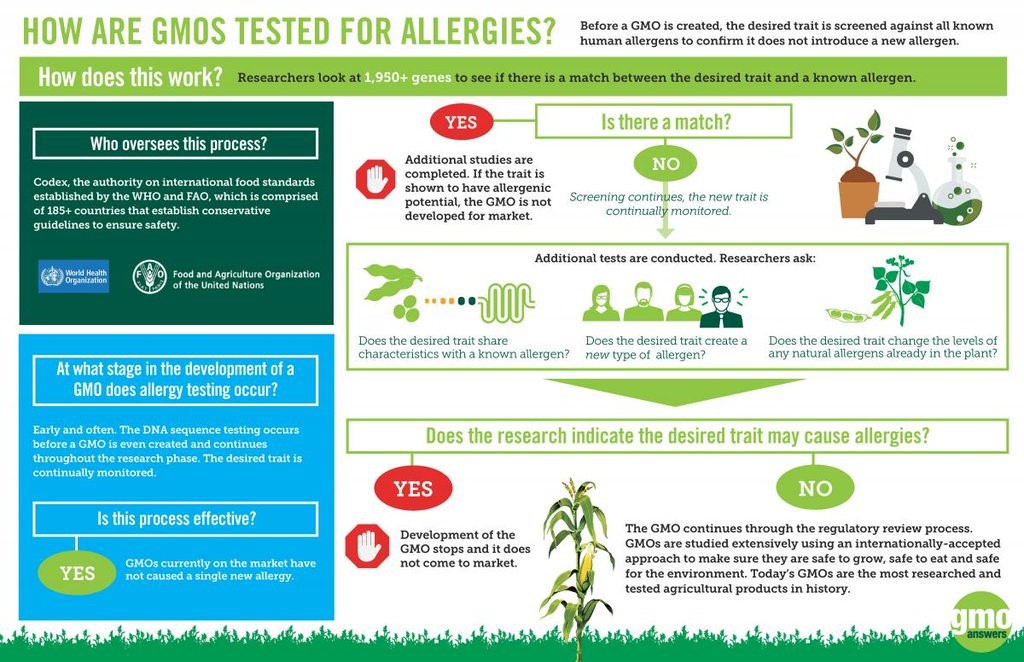
According to the National Academies of Sciences, GMOs take not caused a single sniffle, sneeze or bellyache. How are GMOs tested for allergies? Earlier a GMO is created, the desired trait is screened confronting all known human allergens to confirm it does not introduce a new allergen. Check out this infographic to learn how researchers await at over 1,950 genes to ensure quality and safety.
8. Why do we need GMOs?
Farmers choose to utilize GMOs to reduce the touch of agronomics on their surroundings and reduce their costs — by applying pesticides in more targeted ways, for example. Farmers take likewise used GMOs to save a crop – such every bit Hawaiian papaya — that was being threatened by a illness.
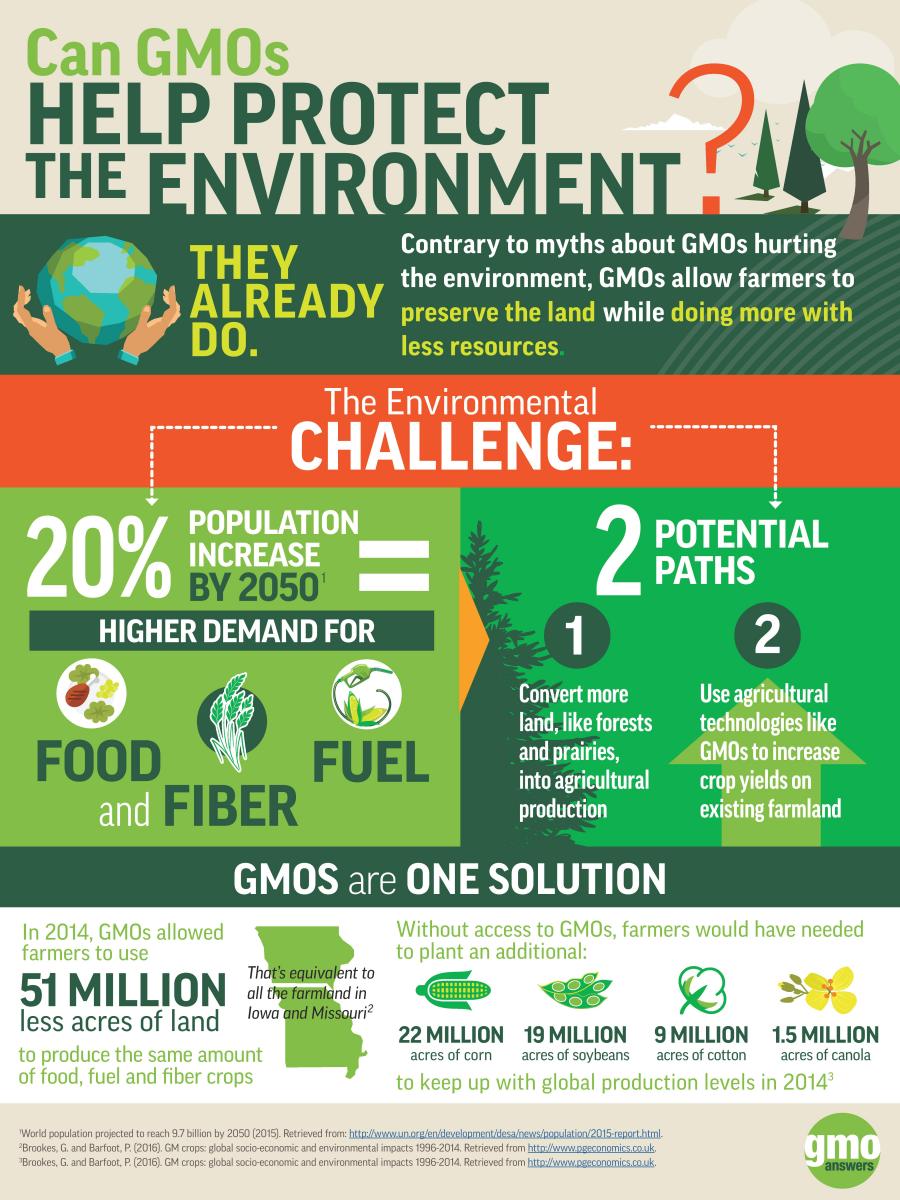
9. GMOs help protect our environment
Many misconceptions might fuel the conventionalities that GMO crops aren't environmentally sustainable, but in reality many of the practices frequently affiliated with sustainable farming are used with GMO crops.
Fewer pesticide applications, conservation tillage (which reduces greenhouse gas emissions) and water conservation are all practices that tin can be used with GMO crops.
x. Become to know GMOs … No, actually!
*Clarification: Following the video's production, the genetically modified apple came to market in 2017, making it 10 GMO crops commercially available in the U.S., non 9 as stated in the video.
Nosotros desire to help you understand GMOs and do a better job answering your questions, no matter what they are. We stand 100 percent backside the health and rubber of the GMO crops on the market today, and believe it's important to help people make informed nutrient decisions, which means breaking downwards what they are, how they are made, what the condom information says.
Join us. Ask tough questions. Be skeptical. Exist open. We wait forward to sharing answers.
Source: https://gmoanswers.com/beyond-labels-10-things-you-should-know-about-gmos
0 Response to "Gmos Facts You Need to Know"
Post a Comment